Creality Hi
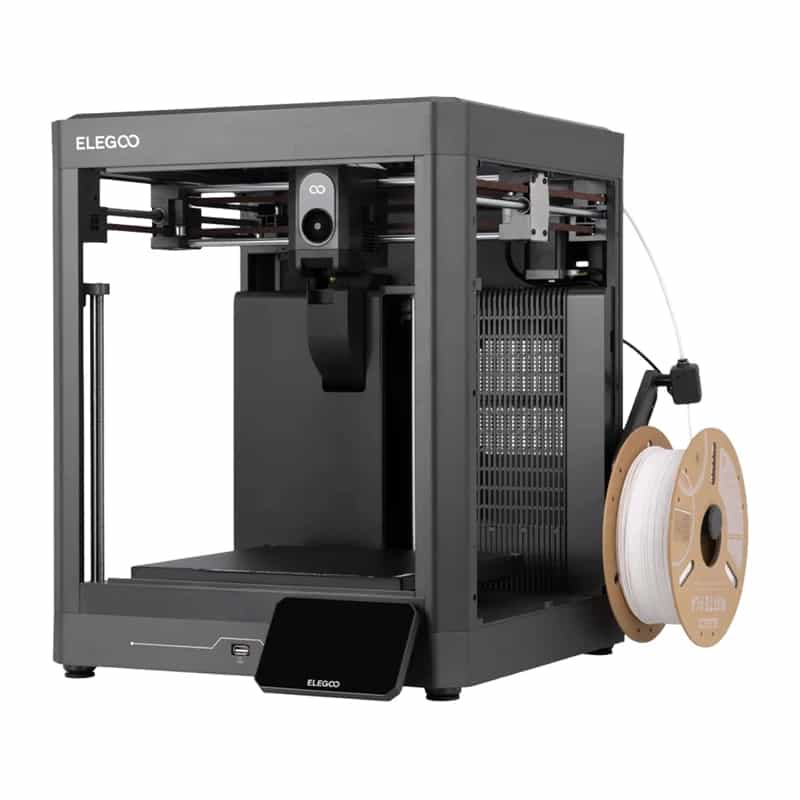
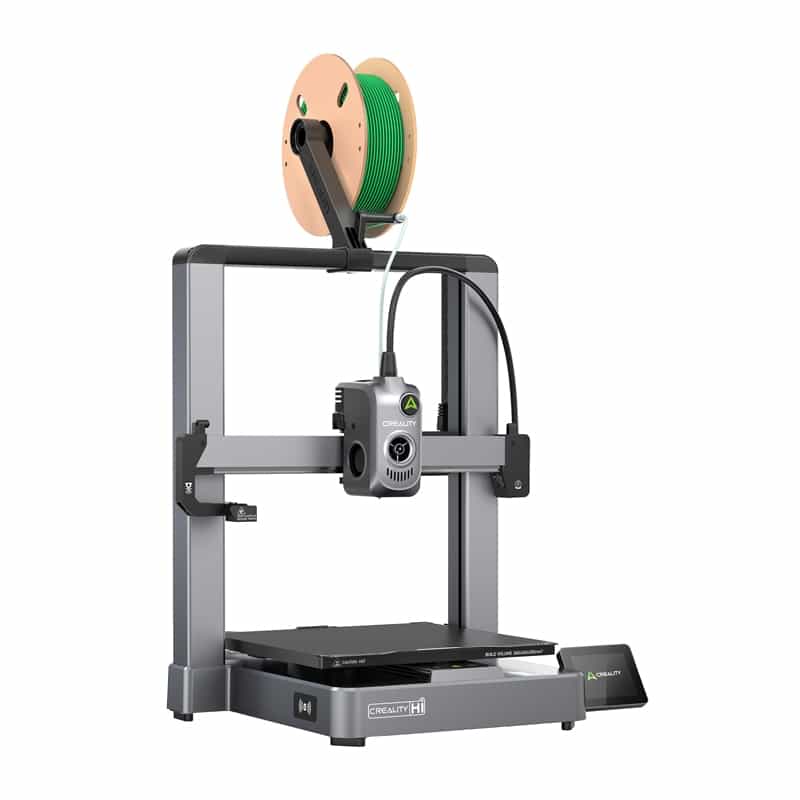
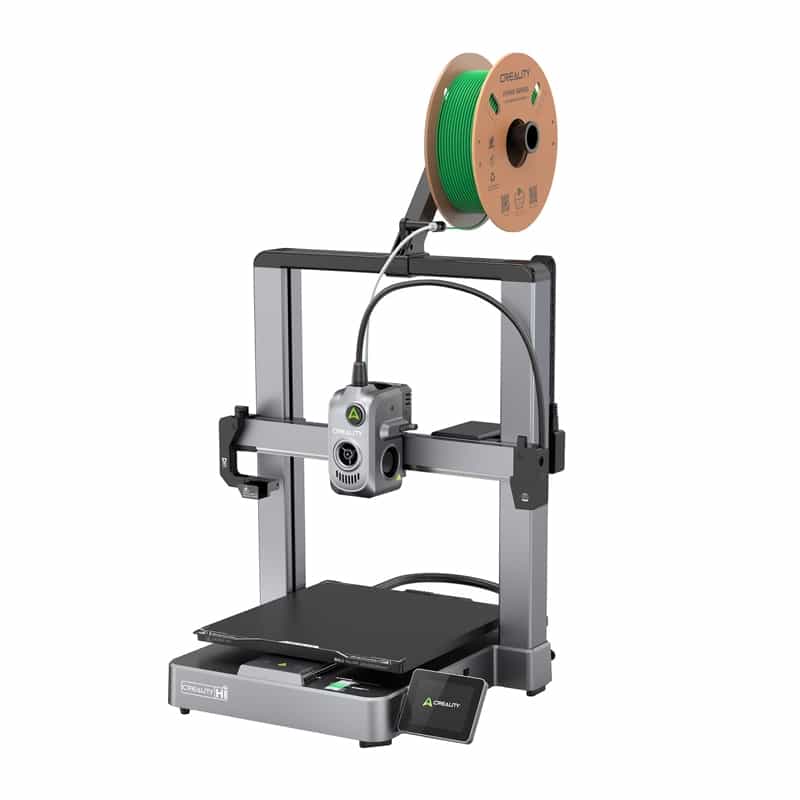
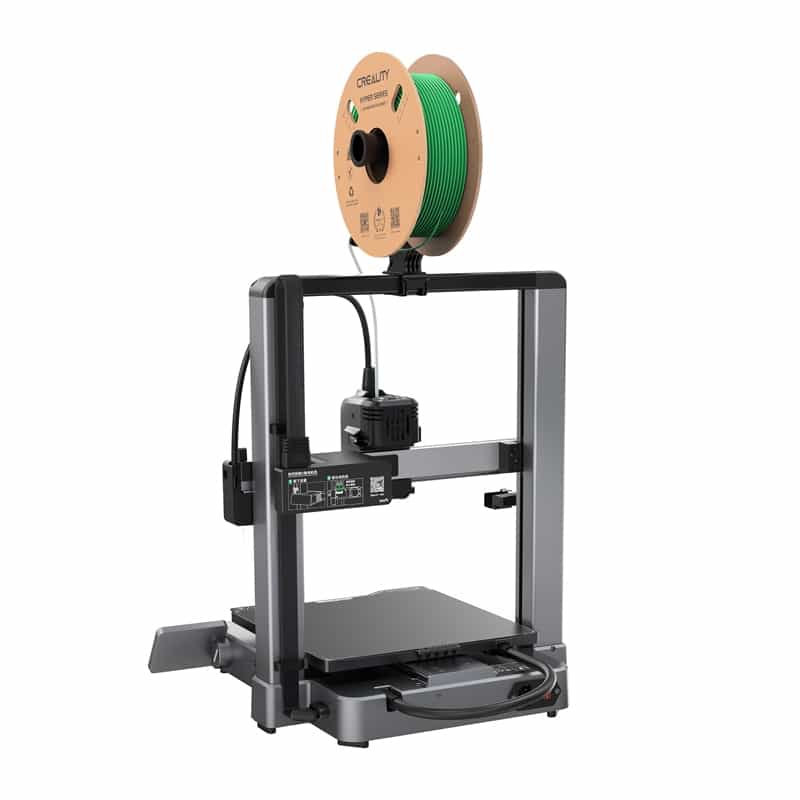
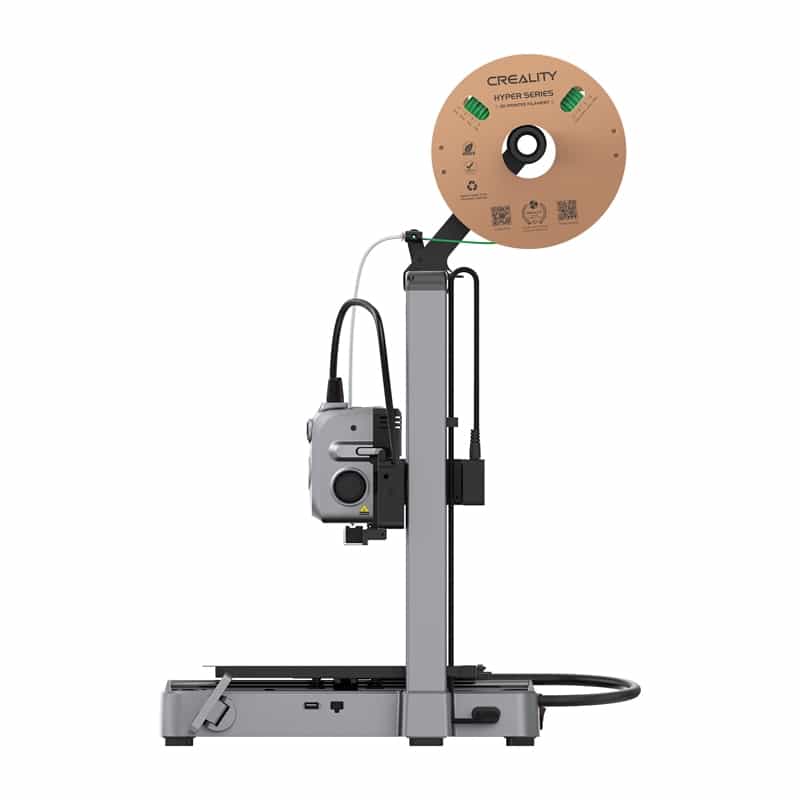
The Creality Hi is a fused deposition modeling 3D printer designed to fabricate thermoplastic parts within a 260 by 260 by 300 millimeter build volume. It utilizes automated calibration, direct drive extrusion, and an active vibration compensation algorithm to process filaments such as PLA, PETG, ABS, and PLA-CF.

Perfect first layer
Automated surface calibration relies on a pressure sensor within the print head alongside independent drive screws on the X-axis. This configuration maps the double-sided flexible epoxy build plate to secure initial layer adhesion.

Easy and fast operation
Thermal management includes a heated build surface capable of reaching 60 degrees Celsius in thirty seconds and 100 degrees Celsius in ninety seconds. This rapid thermal response reduces preparation times prior to fabrication tasks.

Express assembly and audio notifications
Delivery configuration arrives ninety-five percent assembled, requiring the attachment of a limited number of fasteners and wiring connections. An integrated buzzer signals the conclusion of tasks or system interruptions.

Foldable touchscreen and built-in camera
Interface navigation is handled via a 3.2-inch color touch display that folds inward when not in use. A built-in camera allows visual observation of the workspace and generation of time-lapse sequences, paired with a manual privacy shield.

Quiet and precise operation
Mechanical stability is reinforced by a metal frame incorporating cast aluminum components and linear guidance rails. Silent Mode limits acoustic output to 48 decibels during operation.

Active vibration compensation
An onboard G-sensor measures resonant frequencies across varying velocities to suppress mechanical vibration artifacts and surface ringing on manufactured prints.

Intuitive software and application access
Firmware operations run on Creality OS with FLUIDD WebUI compatibility, while slicing tasks utilize Creality Print. Remote monitoring is accessible via Creality Cloud connectivity.

Advanced features and powerful engine power
The motion system employs servo stepper motors on horizontal axes governed by FOC algorithms. Extrusion hardware features a three-metal durable nozzle rated up to 300 degrees Celsius, supported by a filament runout sensor and entanglement detection.