Landing Pads
Drone Landing Pads Buying Guide: Safe Takeoffs, Sensor Shielding & Precision RTH
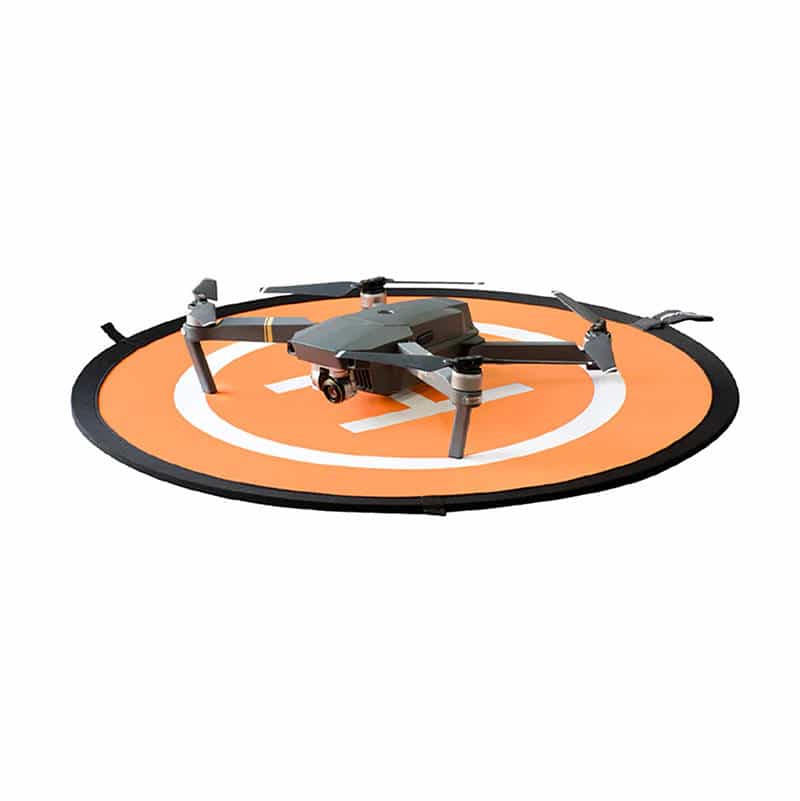
A collapsible drone landing pad (50cm to 110cm diameters) is an indispensable field safety accessory, protecting sensitive 3-axis camera gimbals and brushless motors from abrasive sand, dirt, and wet morning grass. Learn how to select dual-sided high-contrast targets, heavy waterproof PU leather mats, and wind-anchored stakes.
Read Buyer's GuideShow less
Motor Ingress & Optical Sensor Defense
Brushless Motor & Gimbal Mechanical ShieldingHigh-velocity propeller propwash violently kicks up loose quartz sand and gravel; a dedicated pad isolates the take-off footprint, saving internal bearings.
Moisture & Morning Dew BarrierWaterproof synthetic materials shield bottom-mounted air ventilation grilles and battery terminals from wet morning grass and muddy puddles.
Eliminating Tall Grass Blade InterferenceCreates an elevated flat takeoff runway, preventing long weeds from whipping against spinning blades during pre-flight motor arming.
Optical Flow & Downward Sensor HygieneKeeps ultrasonic rangefinders and optical flow positioning cameras pristine from dirt splatter, ensuring rock-solid low-altitude hovering.
Precision Return-to-Home (RTH) Visual Contrast
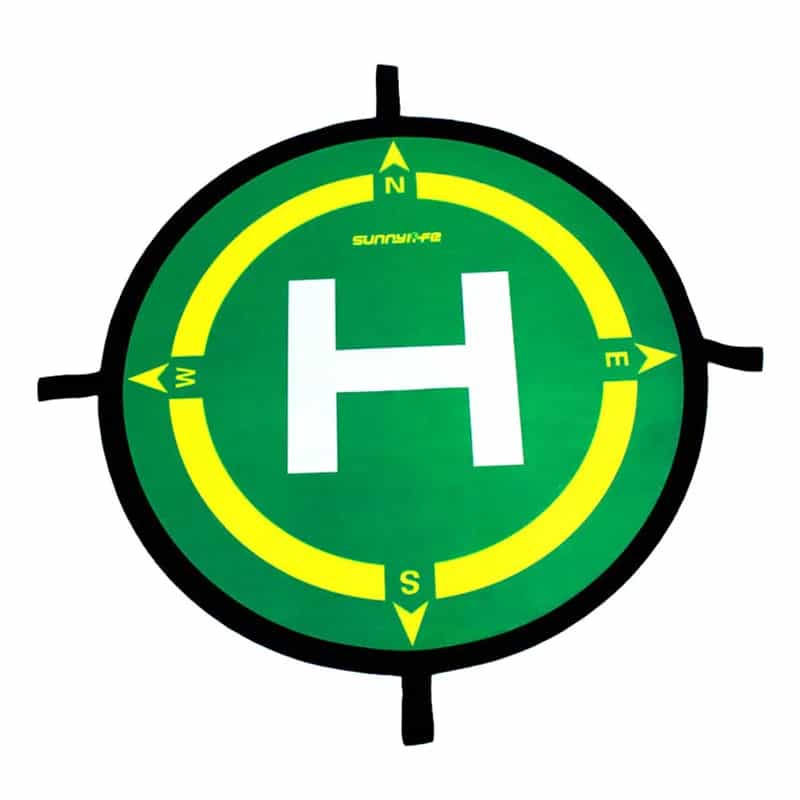
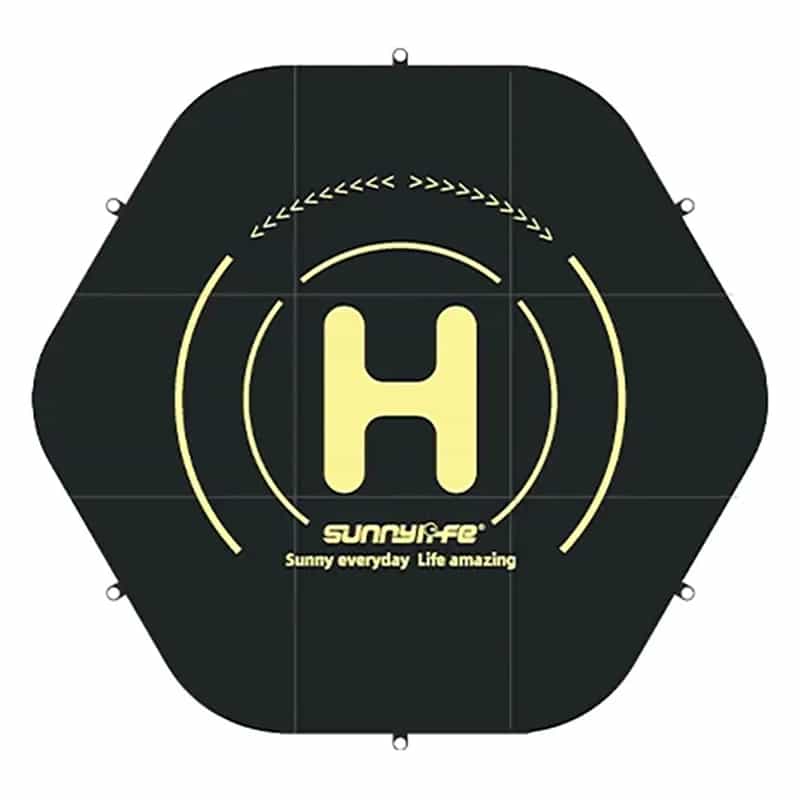
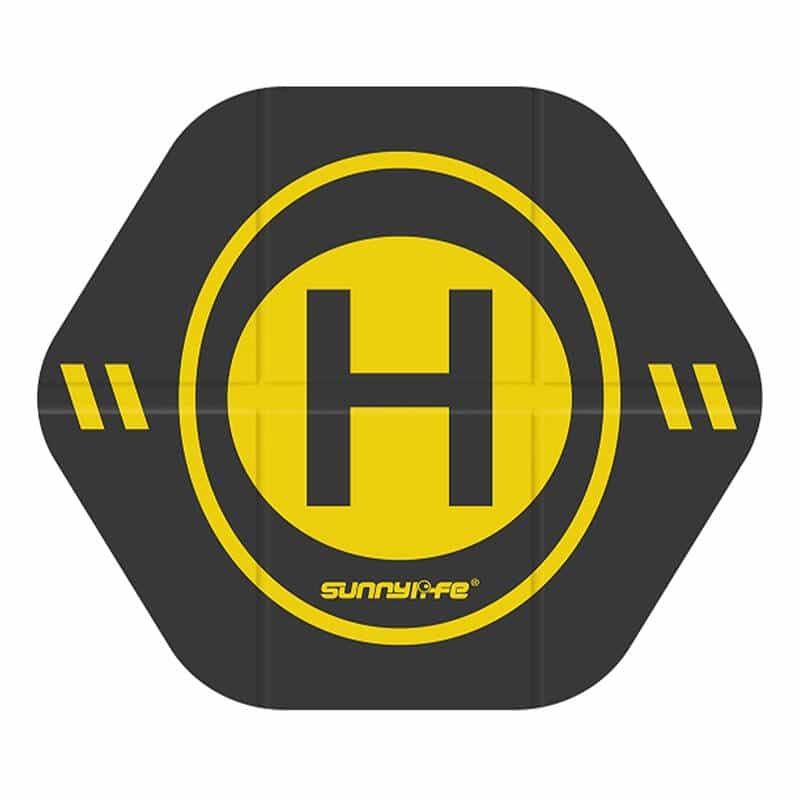
High-Contrast Visual Alignment TargetsAutonomous drones photograph the takeoff position; the bold geometric 'H' bullseye allows computer vision systems to nail automated landings within centimeters.
Dual-Sided Reversible Colors (Orange / Blue)Maximizes terrain contrast across changing outdoor backdrops: deploy the orange face on snow or sand, and flip to blue or bright yellow over lush grass.
Retroreflective Night Flight BordersLuminescent strips and reflective perimeter piping reflect landing spotlights in twilight conditions, guiding safe visual touchdowns.
Active LED Perimeter Search ArraysSpecialized search-and-rescue landing pads feature integrated battery-powered LED piping visible across kilometers of wilderness.
Substrates, Stake Rigging & Diameter Sizing
Heavyweight Foldable PU Leather vs NylonDense foldable PU leather pads lay flat under their own weight in moderate breezes; spring-steel nylon rings spring open in half a second.
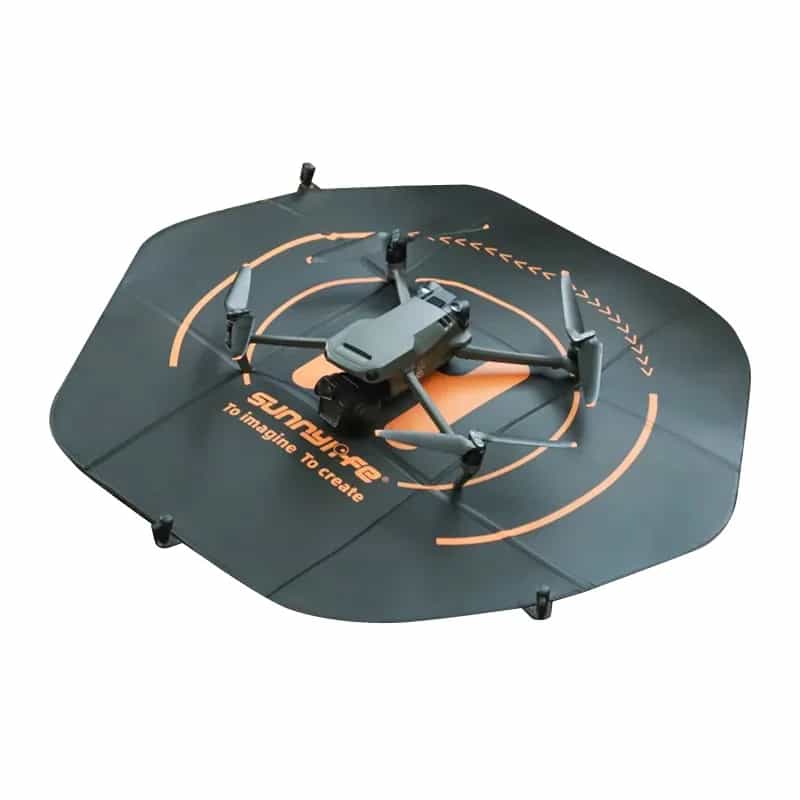
Steel Ground Anchoring StakesHeavy-duty perimeter eyelets accept metal ground stakes to peg the mat firmly into dirt or beach sand, eliminating propeller-flipping blowouts.
Diameter Sizing (50cm vs 75cm vs 110cm)50cm serves compact sub-249g drones (DJI Mini); 75–80cm is the universal sweet spot (Air, Mavic); 110cm caters to heavy commercial craft (Inspire, Matrice).
Ultra-Compact Zippered PouchesTwists into a figure-eight folding down to one-third its open footprint, slipping effortlessly into exterior backpack pouches.
Frequently Asked Questions About Drone Landing Pads
Why should I use a landing pad instead of launching directly from grass?
Launching from grass risks stems catching blades, triggering motor overload errors. More critically, powerful propwash kicks up airborne dirt and sand that enters brushless motor air vents and scratches multicoated camera glass.
How does a landing pad assist with Precision Landing (RTH)?
During ascent, modern drones snap reference images of the takeoff point with downward vision cameras. A bold, contrast-rich orange/blue 'H' target provides an unmistakable visual reference, enabling algorithms to guide the craft straight to dead-center.
Which is better: a foldable PU leather pad or a pop-up spring-ring nylon pad?
Foldable PU leather pads are heavier, naturally laying flat without stakes in calm air, and wipe clean instantly. Pop-up spring-ring nylon pads are lighter for trekking, but must always be pegged down securely in breezy conditions.
What danger occurs if a lightweight landing pad is unanchored in wind?
Strong propwash or wind gusts can suddenly flip an unanchored nylon pad straight into spinning rotors, causing an instant, catastrophic crash and broken propeller blades.