Accessories
Solar Accessories & Charge Controllers Buyer Guide: MPPT vs. PWM, MC4 Connectors, and Cabling
Selecting the correct solar charge controllers, cabling, and weatherproof interconnects maximizes photovoltaic energy yield, safely charges battery banks, and guarantees decades of outdoor environmental resistance. This engineering guide examines MPPT versus PWM conversion efficiencies, IP68 MC4 connectors, series versus parallel array calculations, cable cross-sections, and portable power station adapters.
Read Buyer's GuideShow less
Charge Controller Topologies: MPPT vs. PWM
Maximum Power Point Tracking (MPPT) ControllersContinuously tracks optimal voltage/current operating points, providing up to 98% conversion efficiency and capturing 20% to 30% more energy in overcast weather.
Pulse Width Modulation (PWM) Basic RegulatorsCost-effective, straightforward regulators for modest setups (under 100W) where panel operating voltage closely matches battery nominal voltage.
Cold-Weather Overvoltage Harvesting (Voltage Boost)Solar panel open-circuit voltage rises as temperatures plummet; advanced MPPT controllers safely transform this cold-weather voltage boost into battery amps.
Bluetooth Telemetry and Smartphone DiagnosticsEnables real-time tracking of instantaneous solar wattage, array voltage, daily kilowatt-hour accumulation, and battery state-of-charge via iOS/Android apps.
Connectors, Cabling Infrastructure, and Weatherproofing
Weatherproof IP68 Locking MC4 Photovoltaic ConnectorsSnap-locking positive-retention connectors engineered to withstand decades of relentless UV degradation, rainstorms, and extreme thermal cycling (-40°C to +90°C).
Dual-Insulated Tinned Copper Solar Cable (4mm² and 6mm²)Cross-linked polyolefin (XLPE) jacketed copper cables resist ozone, high mechanical friction, and corrosion across lengthy outdoor runs.
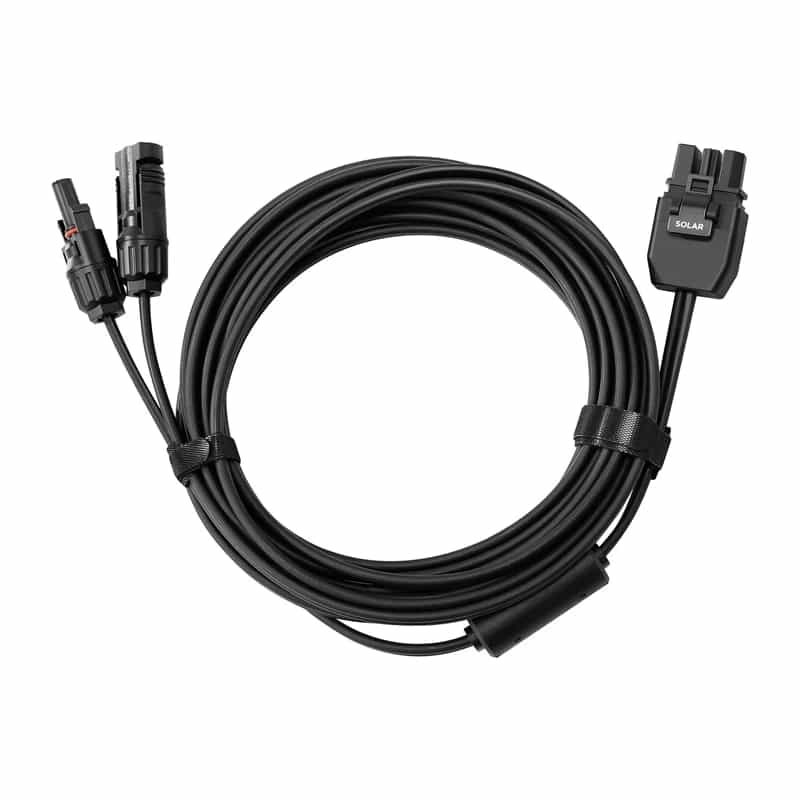
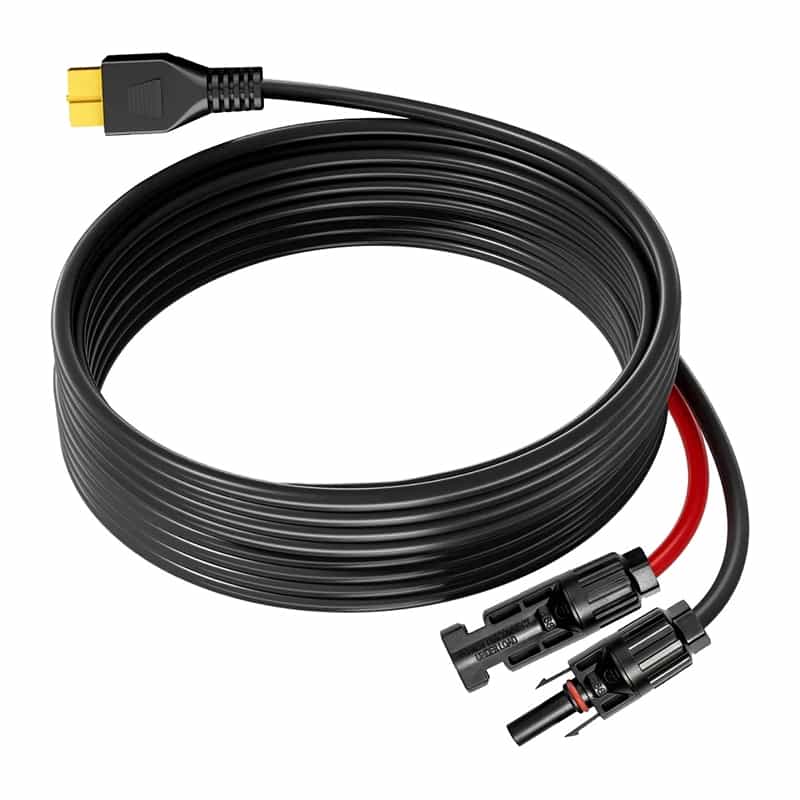
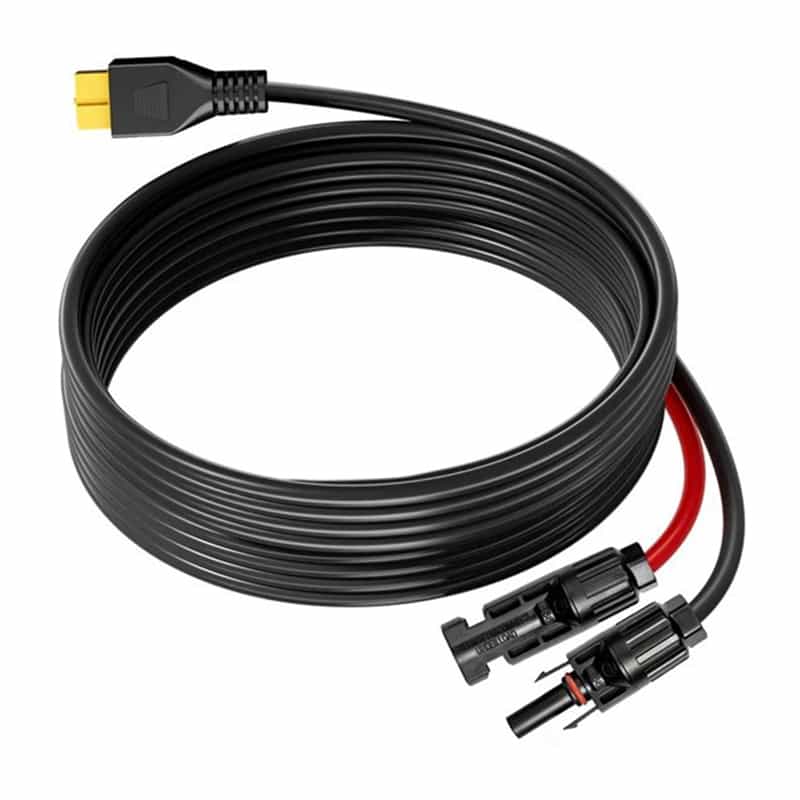
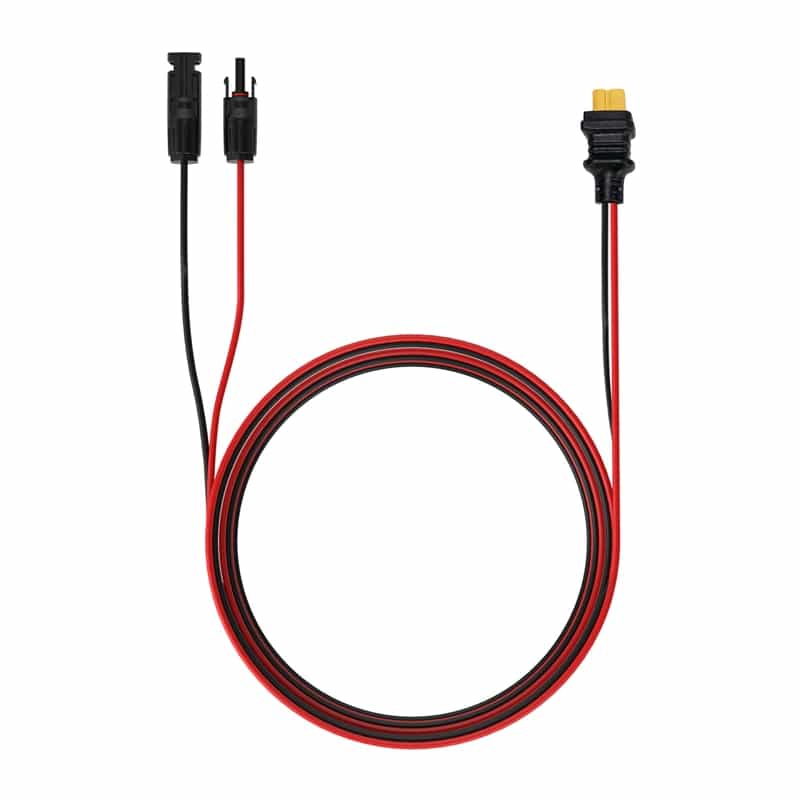
Power Station Adapter Pigtails (MC4 to XT60 / Anderson)Connects standard rooftop or portable folding solar panels directly into high-input solar ports on EcoFlow, Bluetti, and Anker power stations.
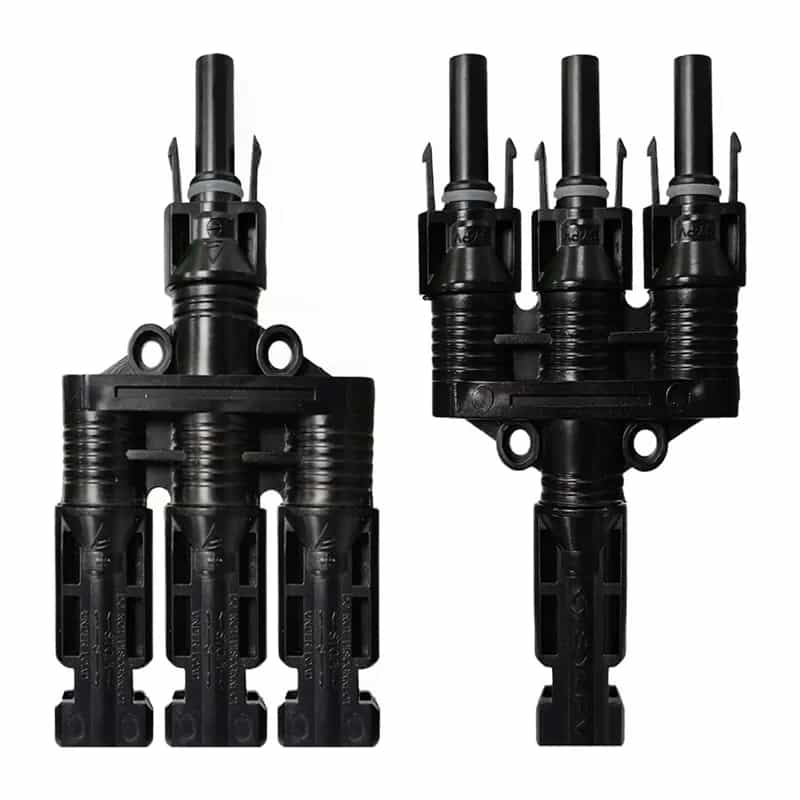
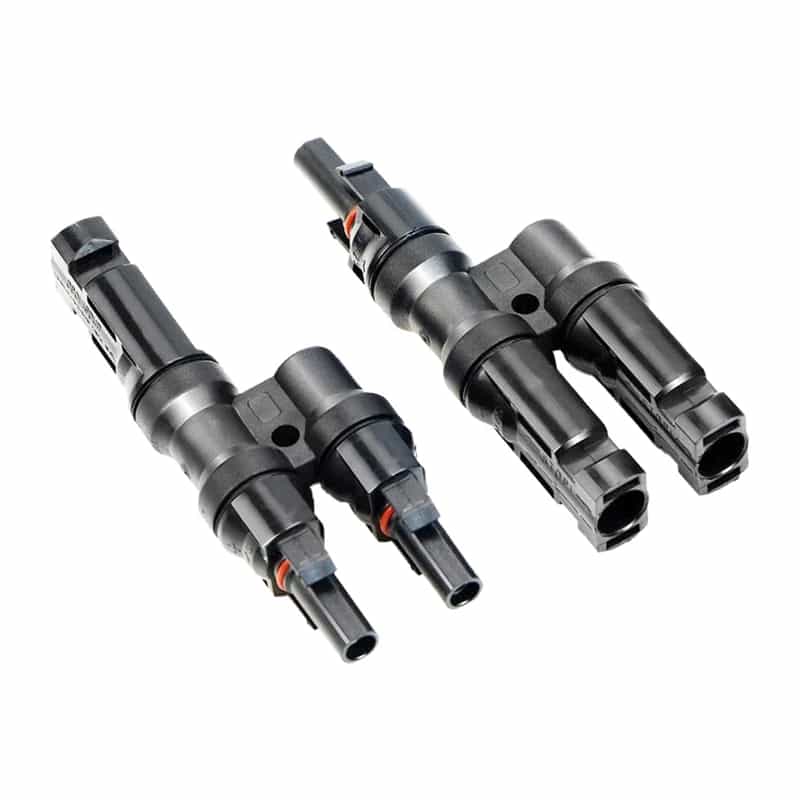
Multi-Panel Parallel Y-Branch CombinersSealed 2-to-1 and 3-to-1 MC4 branch splitters allow users to easily link multiple panels in parallel without stripping wire or assembling junction boxes.
Array Topologies, Overcurrent Fuses, and Safety
Series Wiring vs. Parallel Wiring DynamicsSeries strings elevate voltage (slashing line resistive losses and enabling thinner gauge wire); parallel strings resist localized tree and antenna shading.
Inline 1000V DC Photovoltaic Fuses and BreakersHigh-voltage DC fuses (15A to 30A) protect against catastrophic short circuits, electrical fires, and reverse current feedback between parallel strings.
Surge Protection Devices (SPD) for Lightning DefenseSafely clamps and shunts induced atmospheric electrical surges to earth ground, safeguarding high-end controllers and battery systems from burn-out.
Corrosion-Proof Aluminum Z-Brackets and Roof GlidesCreates an essential cooling airspace underneath panels mounted on camper vans, boats, and cabins while waterproof cable entry glands seal roofs.
Frequently Asked Questions about Solar Accessories and Controllers
Why is an MPPT charge controller vastly superior to a PWM controller?
A PWM controller mechanically clips the panel's voltage down to match the battery voltage (for instance, dropping a 36V panel down to 14V, dissipating more than half of the harvested solar power as waste heat). An MPPT controller functions as an intelligent DC-to-DC buck converter: it takes the high voltage and transforms it into higher charging current (amps), achieving up to 98% conversion efficiency and extracting up to 30% more energy—particularly in cold or cloudy northern climates.
Should I wire my solar panels in series or in parallel?
When utilizing an MPPT controller, wiring in series is generally superior: panel voltages add together (e.g., two 20V panels yield 40V), current stays low, wiring losses are minimal, and the controller wakes up and begins charging earlier in the dawn twilight. Parallel wiring is advantageous if panels suffer from intermittent partial shading (in a series string, one shaded cell throttles the entire string) or if your controller has a low maximum input voltage ceiling (Voc).
What gauge solar wire should I use between my panels and battery?
For short runs under 5 meters (15 feet) on small arrays under 200W, standard 4 mm² (12 AWG) solar wire is sufficient. For runs exceeding 10 meters (30 feet) or systems handling over 15–20 amps of current, you should always step up to 6 mm² (10 AWG) or thicker tinned copper solar cable to prevent excessive voltage drop and conductor heating.
How do I safely connect a rigid roof solar panel to a portable power station?
Standard rooftop solar panels terminate in weather-sealed MC4 male and female connectors. To connect them to a portable power station (such as an EcoFlow or Bluetti), use a dedicated MC4-to-XT60 (or MC4-to-Anderson) adapter cable. Always verify that the open-circuit voltage (Voc) of your solar array does not exceed the power station's maximum solar input voltage specification.