Amplifiers
Headphone Amplifier & DAC Buyer's Guide: ESS Sabre, Class A vs THX AAA, Balanced Audio & Impedance
Dedicated Digital-to-Analog Converters (DACs) and discrete headphone amplifiers unlock the true resolving potential of studio monitors and audiophile headphones. This technical guide examines flagship DAC silicon architectures (ESS Sabre and AKM Velvet Sound), discrete Class A versus THX AAA amplification topologies (THD+N <0.0001%), the acoustic engineering behind balanced 4.4mm/XLR outputs, and output impedance damping factor optimization.
Read Buyer's GuideShow less
Digital-to-Analog Conversion (DAC): Architectures & Clocking
Flagship Converters (ESS Sabre ES9039PRO & AKM AK4499EX)High-tier multi-bit delta-sigma DACs deliver native 32-bit/768kHz PCM and DSD512 decoding with greater than 130 dB dynamic range and infinitesimal noise floors.
XMOS Multi-Core USB Controllers & Femtosecond ClocksIsolates the digital stream from host PC timing jitter; internal dual ultra-low-phase-noise crystal oscillators govern precise sample-rate reconstruction.
Hi-Res Wireless Transmission (Sony LDAC & Qualcomm aptX HD)Bluetooth-enabled DAC stages receive uncompressed 24-bit/96kHz wireless streams at up to 990 kbps bandwidth, delivering lossless fidelity from mobile sources.
Selectable Hardware Reconstruction FiltersEnables listeners to tailor impulse response roll-offs (Linear Phase Fast, Minimum Phase Slow), modulating transient attack and spatial stage cues.
Amplifier Topologies: Class A, Class AB & THX AAA
Pure Class A Discrete Bipolar ArchitecturesOutput transistors conduct continuously across 360 degrees of the audio cycle, completely eliminating zero-crossing notch distortion for luscious analog warmth.
THX AAA (Achromatic Audio Amplifier) Feedforward CorrectionPatented feedforward error-correction topologies drive total harmonic distortion (THD) down to unprecedented thresholds with zero tonal coloration.
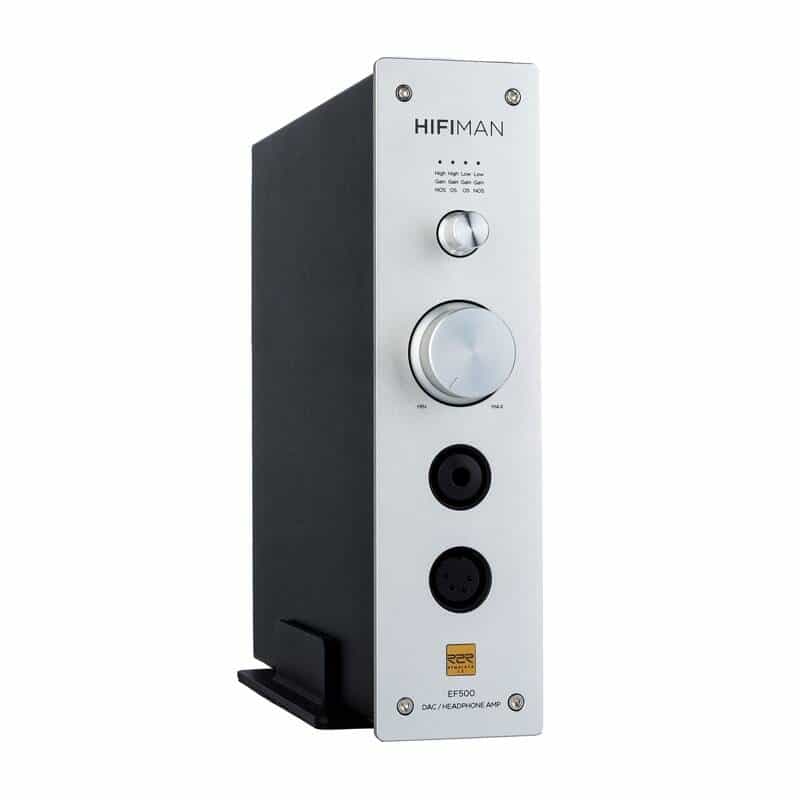
Microprocessor-Controlled Relay R-2R Stepped AttenuatorsEliminates left-right channel volume tracking imbalances even at micro-listening levels, outperforming traditional rotary carbon potentiometers.
Multi-Tier Hardware Gain Switching (Low / Med / High)Matches voltage swing to ultra-sensitive in-ear monitors (IEMs with zero background hiss) while unleashing massive voltage rails for 300–600Ω dynamic drivers.
Fully Balanced Topologies & Output Impedance Matching
Differential 4.4mm Pentaconn & 4-Pin XLR Balanced OutputsCompletely separates signal return paths into independent inverted and non-inverted amplifier phases, doubling voltage swing and extinguishing ground crosstalk.
Sub-0.1Ω Output Impedance (High Damping Factor)Critical for driving multi-driver armature IEMs and low-impedance planar magnetics without skewing crossover curves, ensuring tight, articulate transient bass punch.
Ultra-Low-Noise Linear Power Supply Arrays (LDO Arrays)Multi-stage Low-Dropout linear regulators isolate sensitive analog signal paths from mains 50/60 Hz ripple and noisy high-frequency PC USB bus pollution.
Dedicated Pre-Amplifier Functionality for Active MonitorsRoutes volume-controlled analog audio out to powered studio reference speakers via RCA/XLR, controlled directly from the machined aluminum volume dial.
Frequently Asked Questions About Headphone Amps & DACs
Why do you need a dedicated DAC and headphone amplifier over your PC's onboard audio?
Integrated motherboard sound cards sit in an electromagnetically hostile environment directly adjacent to power-hungry GPUs and switching power supplies, introducing audible hiss, ground loops, and high-frequency digital squeal into sensitive headphones. Furthermore, onboard chips lack sufficient voltage rails and current capacity to drive high-end planar or high-impedance headphones. A standalone DAC/amp isolates conversion, eradicates distortion, and provides substantial dynamic headroom, transforming muddy bass into punchy, highly textured acoustic detail.
What is the concrete advantage of balanced (4.4mm / XLR) over single-ended (3.5mm / 6.35mm)?
In a standard 3.5mm single-ended cable, the left and right stereo channels share a common ground wire, generating electrical crosstalk that narrows perceived soundstage width. In a fully balanced architecture (4.4mm Pentaconn or 4-pin XLR), each channel features isolated positive and negative signal paths driven by separate differential amplifier stages. This rejects common-mode interference, provides up to 2x–4x higher output wattage, and expands stereophonic imaging significantly.
How do you match an amplifier to your headphones' impedance (Ohms) and sensitivity?
High-impedance headphones (250–600 Ω, like Beyerdynamic or Sennheiser HD 600 series) demand substantial voltage swing (Vrms) to achieve clean dynamic peaks without clipping. Conversely, low-impedance, low-sensitivity planar magnetic headphones (like Hifiman) crave raw current (milliamps). A versatile desktop amplifier delivering at least 1,000–2,000 mW into 32 Ω with multi-stage Gain adjustment accommodates both extremes effortlessly.
Can high-resolution wireless Bluetooth (LDAC) replace a wired USB cable connection?
Sony's LDAC codec transmits up to 990 kbps (24-bit/96kHz), delivering outstanding convenience and near-lossless fidelity when streaming from smartphones. However, for uncompromising master-quality playback (bit-perfect uncompressed PCM up to 768kHz and native DSD512) and zero-latency audio production and gaming, a direct wired asynchronous USB connection remains the gold reference standard.